
Puppy Foundations & Development Workshop
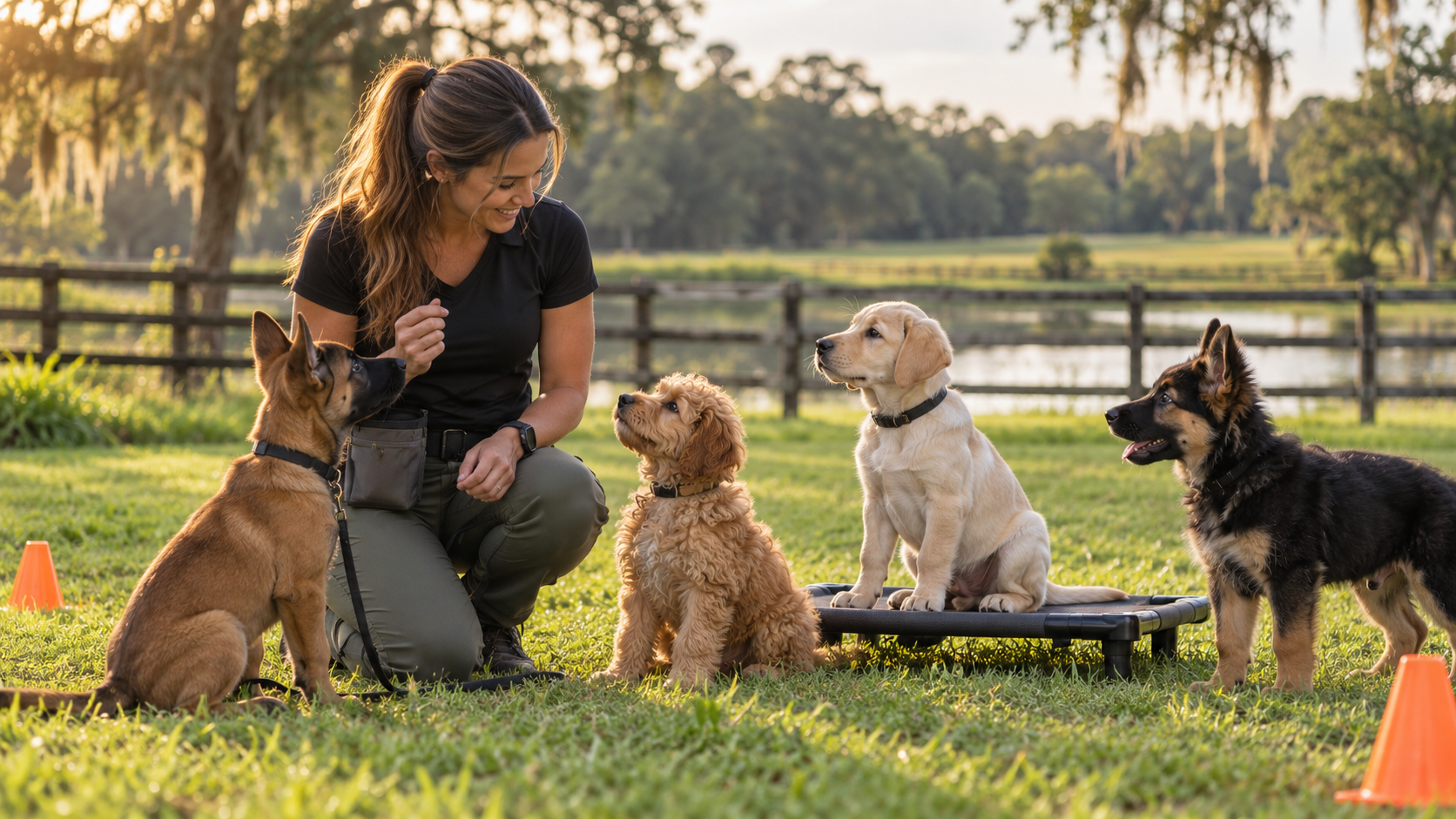
Puppy Foundations & Development Workshop
PUPPY FOUNDATIONS & DEVELOPMENT WORKSHOP
Building the Dog You’ll Live With for a Lifetime
Workshop Details
Dates: February 6–7, 2027 (Saturday & Sunday)
Location: Fulton Strong K9 Private Training Ranch — Homosassa, Florida
Investment: $1,500 per Handler & Puppy Team
Eligible Puppies: 10 weeks through 8 months of age
Breeds: All breeds welcome
Experience Level: No previous training experience necessary
Registration & Inquiries: FSK9info@gmail.com
Building Strong Foundations From the Beginning
The first several months of a puppy’s life are some of the most important stages of behavioral development. The experiences we provide, the environments we introduce, the relationships we build, and the behaviors we reinforce during this time can have a lasting influence on how our dogs navigate the world as they mature.
At Fulton Strong K9, we believe puppy development should go far beyond teaching basic obedience commands. A well-developed puppy needs opportunities to explore, learn, problem-solve, develop confidence, practice appropriate social behaviors, and build a strong relationship with their owner.
Our two-day Puppy Foundations & Development Workshop is designed to help owners better understand their puppies while establishing the behavioral foundations necessary for a successful life together.
Whether you’re raising a family companion, an active adventure partner, a future sport prospect, or a working breed puppy, this workshop focuses on helping you develop the individual dog in front of you.
All breeds, temperaments, and handler experience levels are welcome.
What We’ll Cover
Puppy Development & Behavioral Science
Understanding how puppies learn is one of the most valuable skills an owner can develop. We’ll discuss developmental stages, social learning, genetics, temperament, fear periods, and how early experiences influence future behavior.
Owners will learn to recognize age-appropriate behavior, distinguish normal developmental challenges from concerning behaviors, and understand how expectations should change as puppies mature.
We’ll also discuss the importance of patience, consistency, reinforcement, and creating learning experiences that support confidence rather than unnecessary conflict.
Engagement, Motivation & Relationship Building
Before asking our puppies to work around distractions, we need to establish a reason for them to want to work with us.
We’ll explore building engagement through play, food, movement, exploration, and positive interactions. Owners will learn how to identify what motivates their individual puppy and use those motivations to create meaningful training opportunities.
Our goal is to develop puppies that enjoy learning and actively participate in training rather than simply responding to commands.
Basic Obedience Foundations
We’ll introduce practical obedience exercises that owners can continue developing as their puppies mature, including:
Marker training and reward communication
Sit and down foundations
Recall development
Loose-leash walking
Position changes and body awareness
Introduction to staying in position
Engagement around distractions
Building duration, distance, and reliability gradually
The emphasis will be on teaching owners how to build behaviors correctly, not rushing puppies into advanced expectations before they’re developmentally ready.
Household Manners & Everyday Behavior
Life with a puppy involves far more than structured training sessions. We’ll discuss how everyday interactions influence behavior and how to build consistent expectations inside and outside the home.
Topics include crate training, jumping, mouthing, chewing, door manners, appropriate greetings, settling, impulse control, and developing healthy daily routines.
Owners will learn how to use management, reinforcement, and clear communication to prevent undesirable behavior from becoming a rehearsed habit.
Socialization vs. Neutrality
One of the most misunderstood areas of puppy development is socialization.
Socialization does not mean that every puppy needs to greet every dog, approach every person, or interact with everything in its environment.
We’ll discuss the difference between healthy socialization and overstimulation, and why learning to remain neutral around other dogs, people, sounds, surfaces, and unfamiliar environments is an essential life skill.
Owners will practice appropriate exposure exercises, reading body language, recognizing stress signals, and helping puppies feel comfortable without forcing interactions.
Our goal is to raise puppies that can experience the world confidently without feeling the need to interact with everything in it.
Confidence Building & Environmental Development
Puppies need opportunities to explore the world at their own pace.
We’ll incorporate age-appropriate confidence-building exercises using different surfaces, objects, movement, sounds, environmental challenges, and problem-solving activities.
Owners will learn how to encourage curiosity and independence while recognizing when their puppy needs additional support, distance, or time.
Understanding Your Individual Puppy
Every puppy is different. Breed genetics, temperament, motivation, developmental history, and individual experiences influence how puppies respond to training.
We’ll discuss how to recognize your puppy’s natural tendencies and adapt your handling and training expectations accordingly.
A high-drive working breed puppy may have very different developmental needs from a companion breed, but both benefit from thoughtful training, appropriate outlets, and clear communication.
A Workshop for the Human Side of the Leash
Throughout both days, handlers will receive practical instruction, demonstrations, guided exercises, and opportunities to ask questions about their individual puppies.
This workshop isn’t about producing a perfectly obedient puppy in one weekend. It’s about giving owners the knowledge, handling skills, and understanding needed to continue developing their dogs long after the workshop ends.
Puppy development is a process, and the work we do together during these two days is only the beginning.
Puppy Participation & Requirements
Puppies must be between 10 weeks and 8 months of age at the time of the workshop and have age-appropriate veterinary care and vaccinations. Puppies should be healthy and suitable for participation in a structured, small-group learning environment.
Training exercises will be adapted to the developmental stage, confidence, and physical abilities of each puppy. Frequent opportunities for rest will be incorporated throughout the workshop.
Socialization exercises will emphasize safe, thoughtful environmental exposure rather than forced interactions between puppies.
Start With Understanding. Build With Patience.
Good training doesn’t begin with perfect obedience. It begins with understanding the dog in front of you, creating positive learning experiences, and developing a relationship built on communication, confidence, and trust.
The goal of this workshop is not to rush puppy development but to give owners the tools to continue building a confident, well-adjusted companion throughout adolescence and adulthood.
Join us February 6–7, 2027, for two days dedicated to raising and developing your puppy with intention, patience, and understanding.
For registration or additional information, email FSK9info@gmail.com.