Virtual Group Class & Discussion
A Dog Focused Community for people who LOVE their dogs!

Virtual Group class
Held on: format is now “pop-up” LIVE classes over zoom, announced 1 week ahead of class.
Where: Zoom Meetings & Facebook Group
Price: FREE to clients of FSK9 - please email FSK9info@gmail.com to receive a FB invite
What:
A virtual group ‘class’ where we can have an open discussion and Q&A about dog training
Varied weeks are Classroom-based courses, which cover new material or review of fundamental material.
This is a LIVE group session, your video and mic are optional of course, but participation with the trainer is encouraged!
This is an informal experience designed to offer you a space to gain information for your training journey and/or get to know other like minded dog owners.
Class Subjects:
Dog behavior
Handler Skills
Operant Conditioning
Prong/Ecollar work
Dog Training Ethics
Motivating your dog
Obedience Skills
Manners
Bonding & Engagement work
Nosework
Sportwork
FACEBOOK GROUP ACCESS:
A large part of joining this group is involvement inside our private Facebook group
Learning GUIDES supplement the weekly meetings
Material to read about training your dog
Video tutorials about dog training & behavior
ANNUAL IN-PERSON:
Fulton Ranch Training weekend every March!
FREE to every group member, and their dogs!
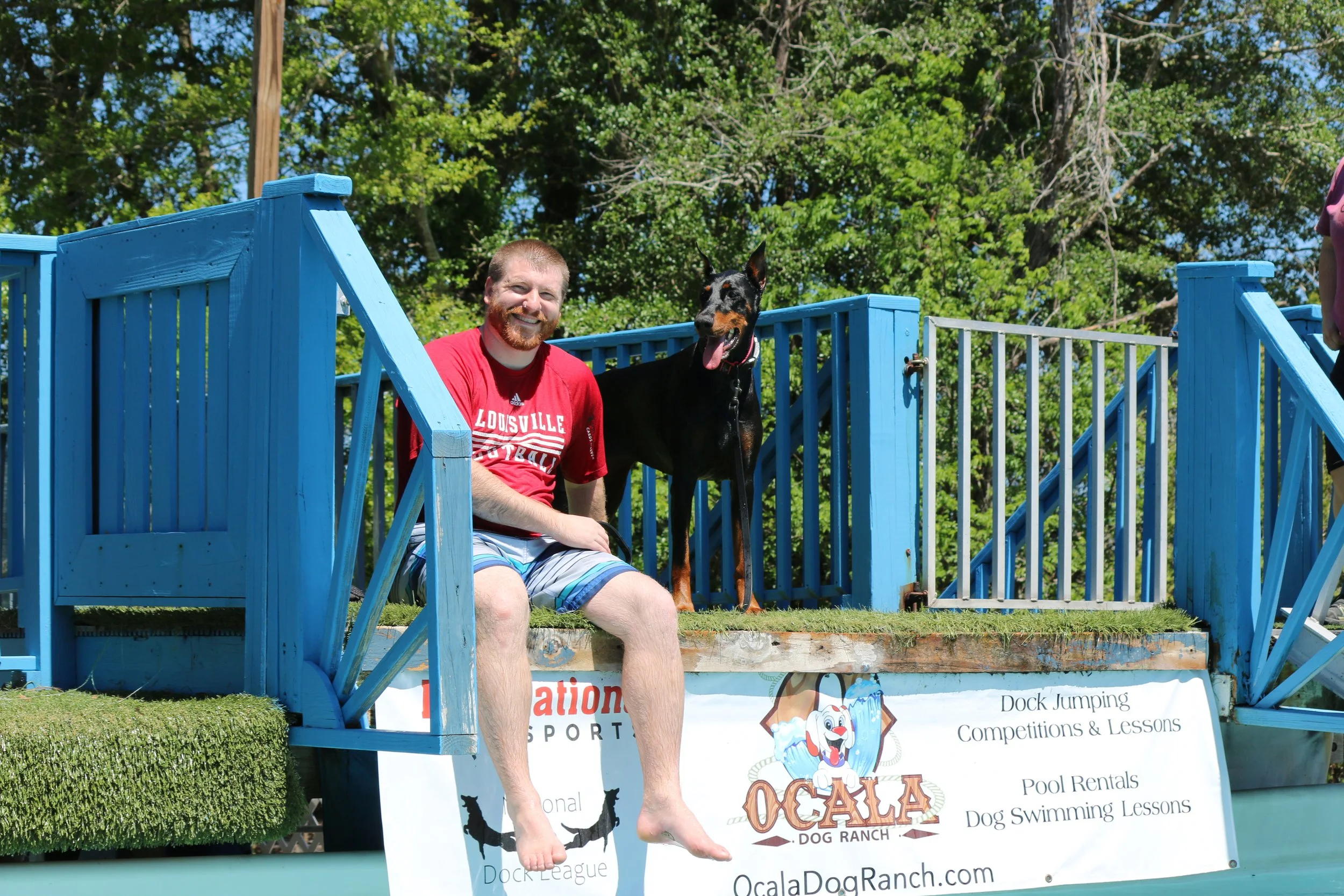
Dock diving day, obedience, bitework, and s’mores night!
This is included in your membership! Optional, but this is a ton of fun!
We look forward to seeing new faces each week! It’s never too late to join!
“Alicia is an AMAZING dog trainer. Initially recommended to me by a friend, I was immediately drawn to her passion for and connection with all dogs, but especially working dogs. She takes a completely unique approach to dog training, using Applied Behavioral Analysis concepts (generally used with non-verbal individuals), and applies those to teaching dogs. The result is a one-of-a-kind learning experience for you and your dog.
I’ve been a part of her online group for a few years, and when I picked my working GSD puppy up in August 2021, my husband and I made tracks for Florida so that she and I could give him the absolute best foundation possible. She’s also continued to support us over Zoom after we left Florida, for which I’m immensely grateful. <3 If I could give 10 stars I would!!!”
Current Class schedule:
Week 1 (May 14) — Foundations of Behavior: Why Dogs Do What They Do
Topics Covered:
The ABC Model (Antecedent–Behavior–Consequence) in real life
Reinforcement vs punishment (what actually changes behavior)
Why “my dog knows it” is usually false
Timing: markers, delivery, and missed opportunities
Identifying what is actually reinforcing your dog
Outcome:
Owners understand behavior as a system—not personality or stubbornness.
Week 2 (May 21) — Engagement & Motivation: Building a Dog That Wants to Work
Topics Covered:
Engagement vs obedience (why obedience fails without it)
Food vs toy reinforcement: when and how to use each
Establishing value in the handler
The problem with constant cues and nagging
Creating “work mode” vs “free mode”
Outcome:
Dog begins choosing the handler over the environment.
Week 3 (May 28) — Clarity in Communication: Cues, Consequences, and Follow-Through
Topics Covered:
What makes a cue clear vs meaningless
The role of follow-through (and why inconsistency kills training)
Differential reinforcement (rewarding correct responses)
Introducing fair, species-appropriate consequences
Avoiding accidental reinforcement of unwanted behavior
Outcome:
Owners stop repeating cues and start getting reliable responses.
Week 4 (June 4) — Real-World Reliability: Generalization, Distraction, and Proofing
Topics Covered:
Why behavior breaks down outside the home
Generalization across environments, people, and stimuli
Gradual exposure vs flooding
Proofing behaviors with increasing difficulty
Building reliability without constant reinforcement
Outcome:
Dogs perform reliably in real-world environments—not just controlled settings.